Key takeaways
- Water should run away from the house, not toward it.
- A gentle, steady slope works better than a steep, short one.
- Swales, French drains and culverts move water that grading alone cannot.
- Downspouts and gutters are part of the drainage plan.
Why grading matters
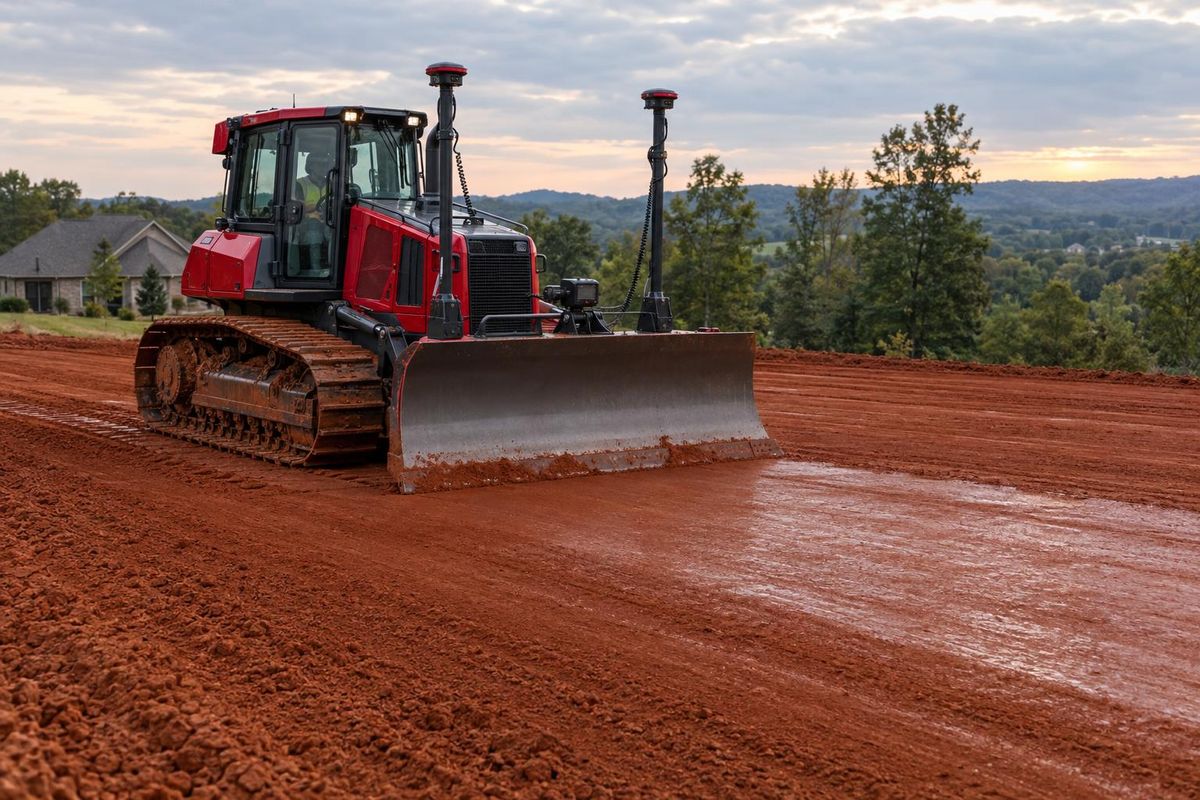
Water follows gravity. If the ground around a house slopes toward it, water collects at the foundation, seeps into crawl spaces and basements and softens the soil. Grading sets the path water takes across a lot.
Good grading is the least expensive drainage fix, and it comes first.
What a good slope looks like
The ground near the house should fall away from it, with a steady, gentle slope for the first several feet. Beyond that, the lot should slope toward a swale, ditch, street or other outlet.
Very flat areas hold water. Very steep areas wash out. Moderate and steady is the goal.
Tools beyond grading
When grading alone cannot move the water, other tools help. Swales are shallow channels that carry runoff. French drains collect groundwater. Culverts carry water under driveways. Detention basins slow it down.
Each tool needs an outlet. Water has to go somewhere safe.
Warning signs
Standing water after a rain, soggy lawn that never dries, erosion channels, water in a crawl space, cracks in a foundation and mud washing into the street are all signs that drainage needs attention.
Take photos during a rain and share them with your contractor. They show the problem clearly.
Quick answers
How do I know if my yard slopes toward the house?
After a rain, watch where water flows. A level or a string line can also show the slope.
Do gutters matter?
Yes. Downspouts should carry water well away from the foundation.
Can I fix drainage myself?
Small problems sometimes can be fixed with soil and downspout extensions. Larger problems usually need equipment.