Key takeaways
- Most driveways fail from water and soft ground, not from the stone on top.
- A crown and side ditches carry water off the surface.
- Base stone and top stone do different jobs.
- A solid base also makes a good foundation for paving later.
Why driveways fail
Ruts, potholes and washouts are signs of water and soft ground. A flat or low driveway collects water, the surface turns to mud and traffic pushes the stone down into the soil.
Fixing the cause matters more than adding another load of stone.
Shape and drainage
A driveway should have a crown, meaning a higher center that sheds water to both sides. Side ditches carry the water away. Where the driveway crosses a ditch, a culvert of the right size carries water through.
On slopes, water bars or diversion ditches stop water from running down the surface.
Base and top stone
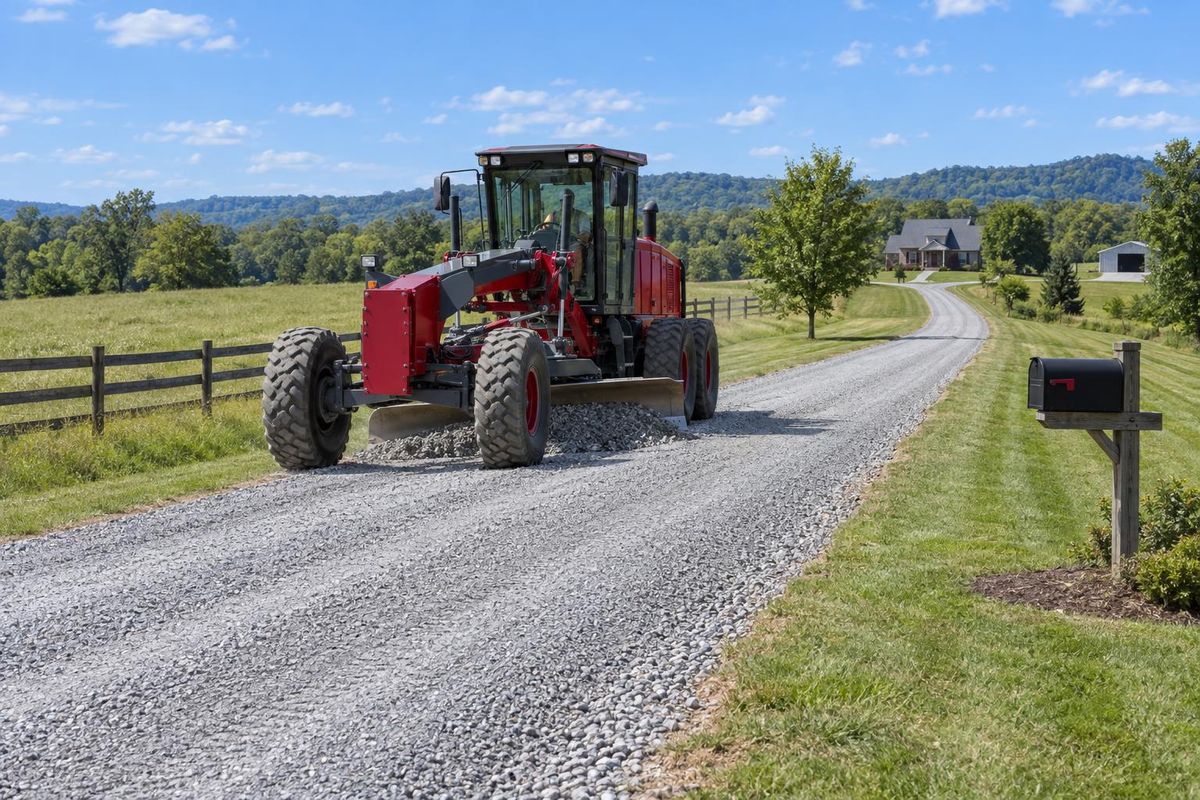
A base layer of larger crushed stone locks together under compaction and carries the load. A top layer of smaller stone gives a smooth, tight surface. Fabric under the base helps on soft clay.
Compact each layer. Dumping stone on soft ground just buries it.
Maintenance
Even a good driveway needs occasional grading, fresh top stone and clear ditches and culverts. Check them after heavy rain.
Paving later is easier and lasts longer if the base was built well.
Quick answers
How much stone does a driveway need?
That depends on the length, width, thickness and soil. We can work out the quantity for you.
Is fabric worth using?
On soft clay and wet areas, yes. It keeps the stone from sinking into the soil.
Can I pave a gravel driveway?
Yes, if the base is solid and drains well. Many are paved later.