Key takeaways
- Red clay holds water and turns slick when wet.
- Limestone and ledge rock are close to the surface on many lots.
- Karst features such as sinkholes and springs need extra care.
- A probe or test pit before design saves surprises.
Red clay
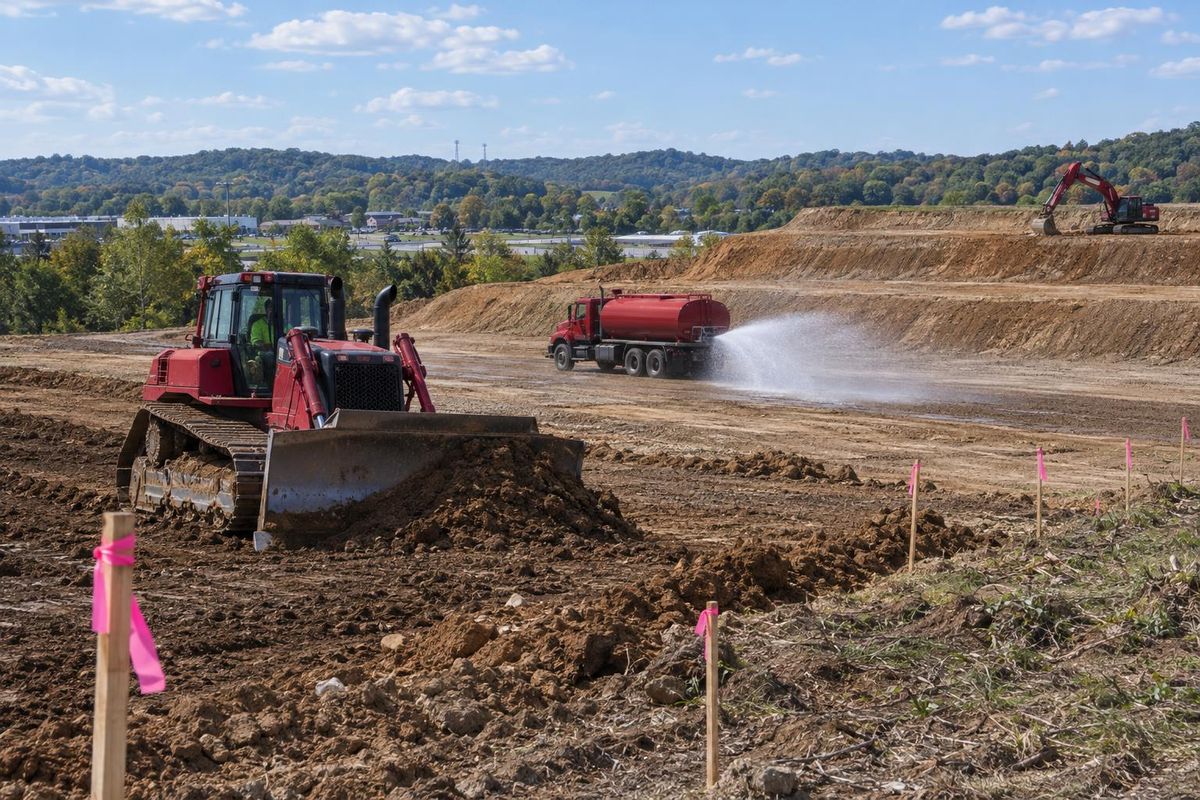
Much of the region has clay soil. It can be firm and stable when dry and sticky and slippery when wet. Clay holds water, so it drains slowly and swells and shrinks with moisture.
Good grading, compaction and drainage matter more in clay than almost anywhere else.
Limestone and ledge rock
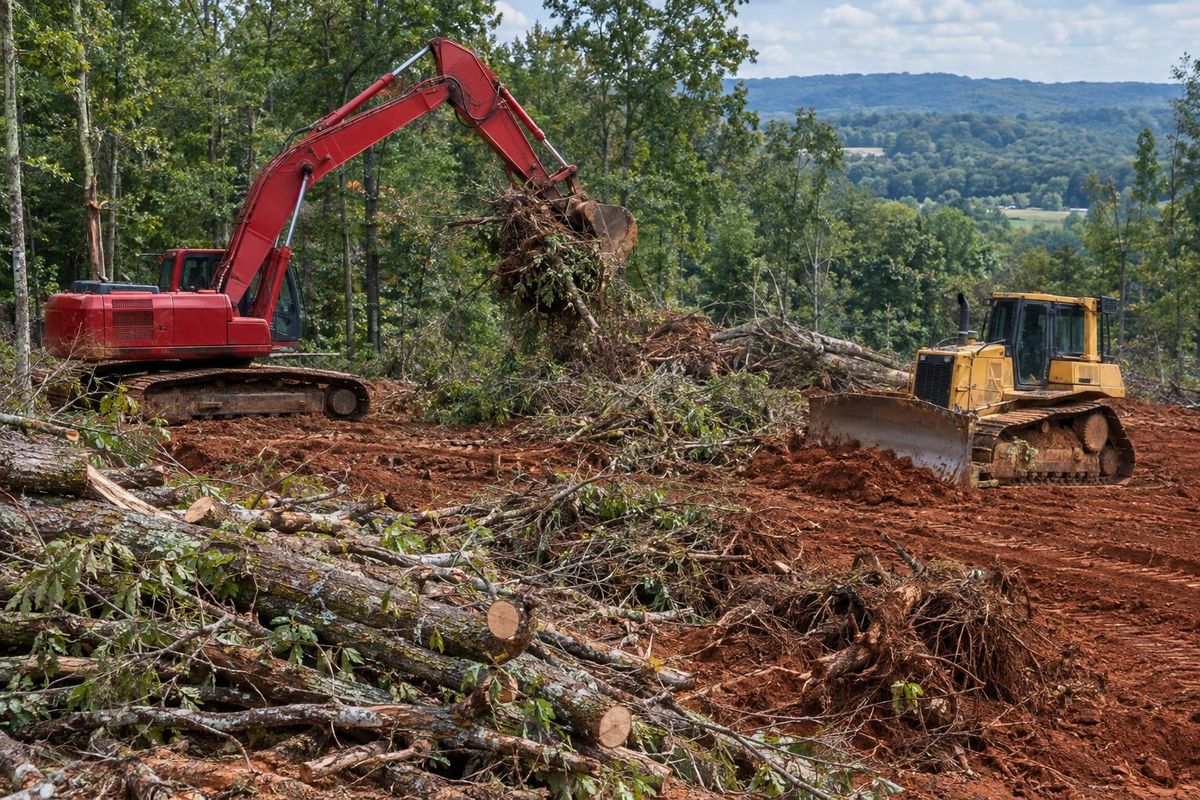
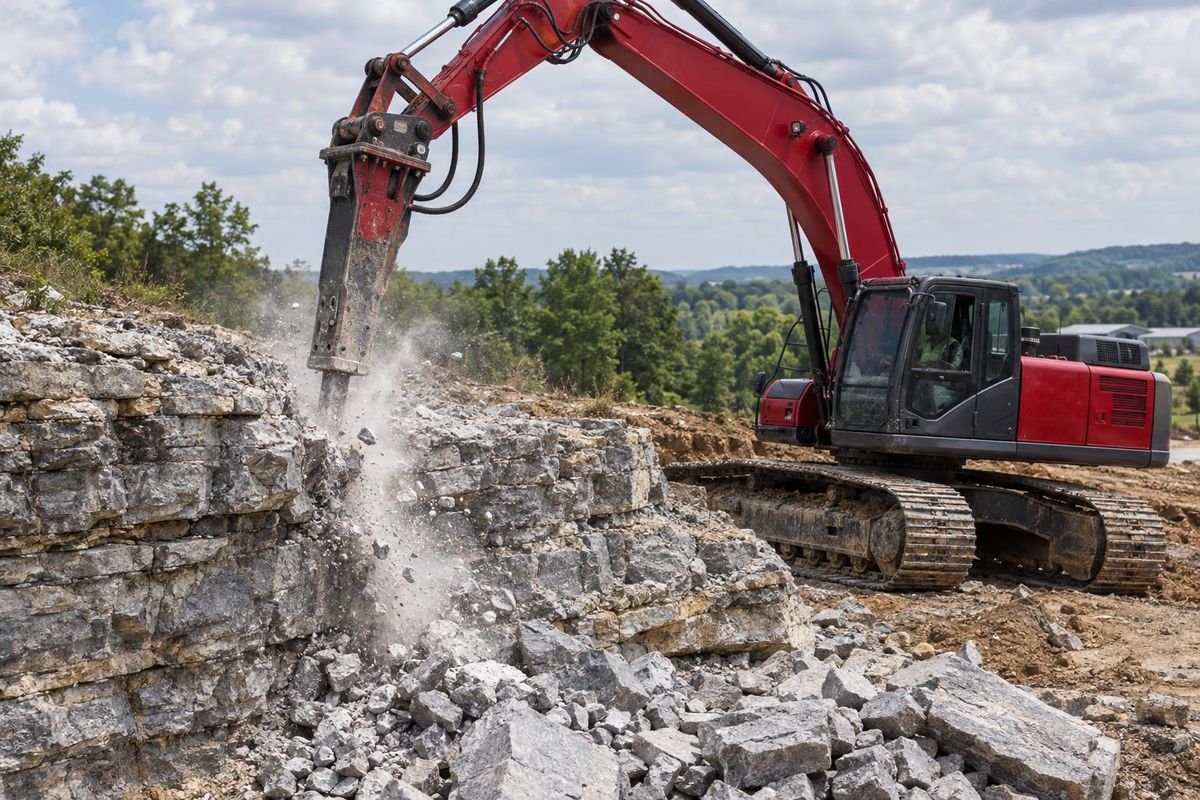
Limestone lies under much of Middle Tennessee, sometimes only a foot or two down. When it appears in a foundation or trench, the job needs a rock hammer or rock bucket and more time.
Rock changes the schedule and the scope. A probe or test pit before the design is final helps you plan for it.
Springs, seeps and sinkholes
The region's limestone geology, called karst, can create sinkholes, caves and springs. Water moves through cracks in the rock, and sometimes the soil above settles or collapses.
If you see a depression, a spring or a place where water disappears, tell your contractor and consider asking an engineer to look at it.
What it means for your project
Soil and rock affect foundation depth, drainage design, septic suitability, pond construction and the equipment needed. They also change how much time and soil handling a project needs.
Early information leads to better plans and fewer surprises.
Quick answers
Can I build on a lot with a lot of rock?
Often yes, with planning. Rock affects excavation, utilities and drainage, so it helps to know early.
Is a sinkhole a reason not to build?
Not always. An engineer can advise on the risk and the right approach.
How can I find out what is under my lot?
A probe, test pits or a soil report can show the soil and rock depth.